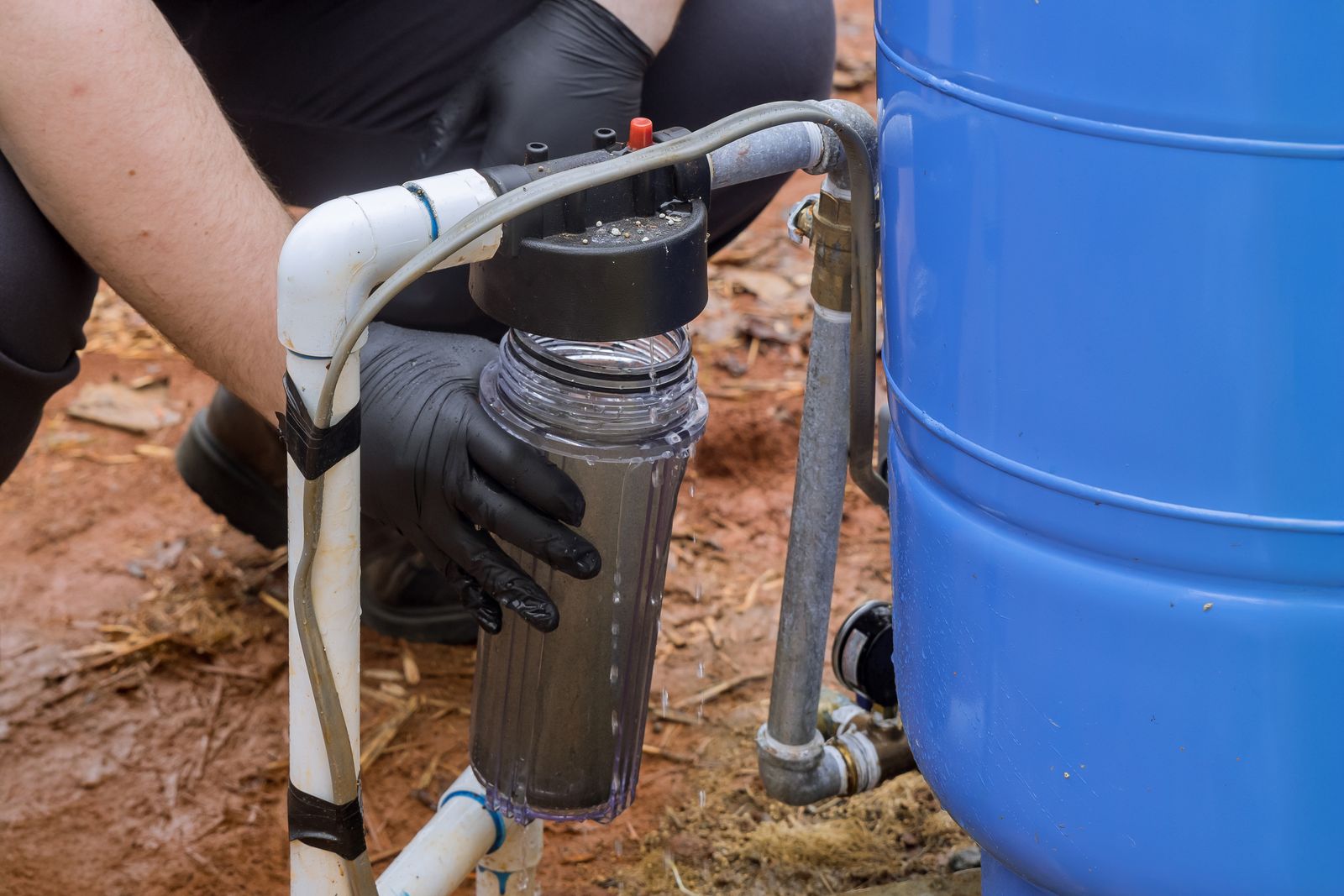
Diagnosing fouled or worn resin and softener-caused low water pressure, with recharge or resin replacement when the bed has lost capacity.
Resin Tank & Low Water Pressure Repair Overview
Resin beads are what actually pull hardness minerals out of your water, and they have a working life — iron exposure, chlorine, and sediment all foul the bed over years of use, and eventually it stops exchanging hardness for salt regardless of how well the rest of the unit is running. A resin bed that's fouled or physically worn down is one of the more common reasons a softener that regenerates on schedule still isn't producing soft water.
Low water pressure that started after softener installation, or that's gradually worsened, is often resin-related too — a channeled or broken-down bed increases resistance to flow through the tank. We diagnose whether pressure loss is coming from the softener itself (a clogged screen, fouled resin, or an undersized unit for your household) or from something elsewhere in the plumbing before recommending any fix.
What's Included With Resin Tank & Low Water Pressure Repair
Resin bed condition assessment
Iron and sediment fouling diagnosis
Water pressure testing before and after the softener to isolate the cause
Resin cleaning/recharge or full resin bed replacement, whichever the unit actually needs
Post-repair hardness and pressure test
How We Handle Resin Tank & Low Water Pressure Repair
Call or book online
Tell us what's happening — hard water, a stuck cycle, or a leak — and we'll give you a same-day or next-day appointment window.
On-site water test & diagnosis
A technician tests your actual water hardness at the tap and inspects the valve, resin, and brine tank before recommending anything.
Upfront pricing
You get a clear price before any work begins — repair or new unit installation, no surprise add-ons after the fact.
Repair or install
Most repairs and standard installations are completed in a single visit, using a properly sized unit when replacement is the better option.
Re-test and walkthrough
Every unit is tested through a full cycle and re-checked for hardness before we consider the job finished, with a quick walkthrough of what to watch for.
Resin Tank & Low Water Pressure Repair Cost
Most softener repairs cost far less than a full replacement — we'll always tell you honestly which one makes more sense for your unit's age and condition.
Service
Typical Price
What Affects It
Diagnostic visit / minor repair (salt bridge, bypass valve)
$89–$175
Most single-visit repair calls
Control valve repair or rebuild
$150–$400
Depends on whether it's a seal/program fix or a full valve rebuild
Resin tank recharge or replacement
$200–$450
Varies by tank size and whether the bed needs full replacement
Brine tank, float, or injector repair
$120–$250
Common after a salt bridge or high-water symptom
Leak repair
$100–$300
Depends on whether it's a fitting/seal or the tank body itself
Full system replacement (unit + installation)
$900–$2,500
Varies by household size, water hardness, and iron content
Ranges are estimates for typical jobs. Final pricing is confirmed on-site before work begins.
Where Resin Tank & Low Water Pressure Repair Is Available
We're adding new cities regularly. Resin Tank & Low Water Pressure Repair is currently available in:
Red Wing's municipal water, drawn from deep groundwater wells, tests at 16–17 grains per gallon of hardness — firmly in the "very hard" range — plus naturally occurring iron that a softener has to fight every single day.
Layton draws its water from the Weber Basin regional system, which tests at roughly 15–20 grains per gallon of hardness — hard enough that Davis County is regularly cited among the hardest municipal water in the country.
Bountiful's water, drawn from the same Weber Basin regional system serving Davis County, tests at roughly 15–20 grains per gallon of hardness — a steady daily load on a softener's resin and valve components.
Kaysville draws from the same Weber Basin regional water system as the rest of Davis County, testing at roughly 15–20 grains per gallon of hardness — a steady daily strain on a softener's resin and valve.
Syracuse — the gateway city to Antelope Island via its causeway — draws the same Weber Basin regional water as the rest of Davis County, testing at roughly 15–20 grains per gallon of hardness.
Sunset, one of Davis County's smallest cities at just 1.3 square miles, shares the same Weber Basin regional water supply — testing at roughly 15–20 grains per gallon of hardness.
Phoenix blends Colorado River water from the Central Arizona Project with Salt and Verde River water from the Salt River Project, both carrying enough desert mineral content to test at 15–20 grains per gallon of hardness.
Oxnard blends imported State Water Project supply with local groundwater, landing at a citywide average around 17 grains per gallon of hardness — though it swings from about 12 to 24 GPG depending on which source is feeding a given part of town.
Alexandria's water, supplied by Fairfax Water from the Potomac River and Occoquan Reservoir, tests at a moderate 9 grains per gallon — hard enough to matter, but noticeably gentler than many U.S. cities.
Most homes outside downtown Fairbanks run on private wells, not municipal water — and USGS testing shows those wells vary widely, with iron levels up to 46 mg/L and hardness ranging from soft to extremely hard depending on the specific property.
Frequently Asked Questions — Resin Tank & Low Water Pressure Repair
How do I know if my water softener's resin needs replacing?
The clearest sign is hardness returning even right after a regeneration cycle completes normally — that points to resin that's lost its capacity rather than a valve or salt problem, which we confirm with a water test.
Can a water softener cause low water pressure in my house?
Yes, if the resin bed is fouled or channeled, or if the unit is undersized for your household's usage — we test pressure on both sides of the softener to confirm whether it's actually the cause before recommending a fix.
How long does water softener resin usually last?
Well-maintained resin often lasts 10–15 years, but heavy iron content — common in well and some municipal groundwater supplies — can shorten that noticeably, which is something we check for directly rather than assume.
Open 24 Hours a Day, 7 Days a Week
Resin Tank & Low Water Pressure Repair
Call now for same-day or after-hours resin tank & low water pressure repair — upfront pricing, no surprises.